


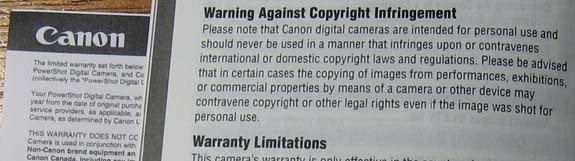
I don't remember a copyright warning in the manual of my last digital cameral
Posted by Wendy at May 26, 2005 10:49 PM | TrackBackBut does it have a EULA too?
I haven't clicked through any "agreements" yet.... but I'm sure if I install any of the computer software, there will be EULAs aplenty.
Posted by: Wendy on May 27, 2005 11:26 AMI was thinking a EULA for the camera *itself* ("This camera is licensed, not sold. By using this camera, you agree to the following: ..."). Maybe EULA'ing the embedded software is practically the same thing
(sure, you can take pictures, but not download them anywhere).
Next they'll be telling you what pictures to take.
Posted by: Pritam Shetty on May 30, 2005 11:05 PMI think Starbucks uses this angle to enforce their ban on photography in their shops.
Posted by: Bill Koslosky on May 31, 2005 04:31 AMAnybody can claim anything. Aside from restrictions imposed as a condition of admittance to a venue or performance, it would seem that simply recording by film/digital image, whatever, taken in public, where there is no expectation of privacy, then the rights to such images would reside with the photographer.
I suppose CANON could explain what they mean by their notice and under what circumstances they think it might apply. I doubt any type of "shrink wrap" or other unilateral assertion could overturn or transfer the photographer's rights. At least in most jurisdictions in the USA.
Posted by: on July 30, 2005 07:13 PMExcerpt: Wendy notices that her new Canon camera comes with a warning that it's not intended to be used to infringe on anyone's copyright. Next to get stamped with that stupid warning: Pencils, paper, brains and the air used by speech. [Technorati tags: canon c...
Weblog: Joho the Blog
Tracked: May 30, 2005 08:15 PM
Excerpt: Techie lawyer Wendy Seltzer snaps a picture of the manual of her new Canon digital camera which gives a warning that her camera is
Weblog: Wireless Doc
Tracked: May 31, 2005 04:27 AM
Excerpt: A friend of mine has a new baby and, with family spread across the globe, likes to use online photo-printing services to share snapshots of the growing baby. She can create an online album, load up photos from the digital...
Weblog: Copyfight
Tracked: June 7, 2005 12:13 PM
